
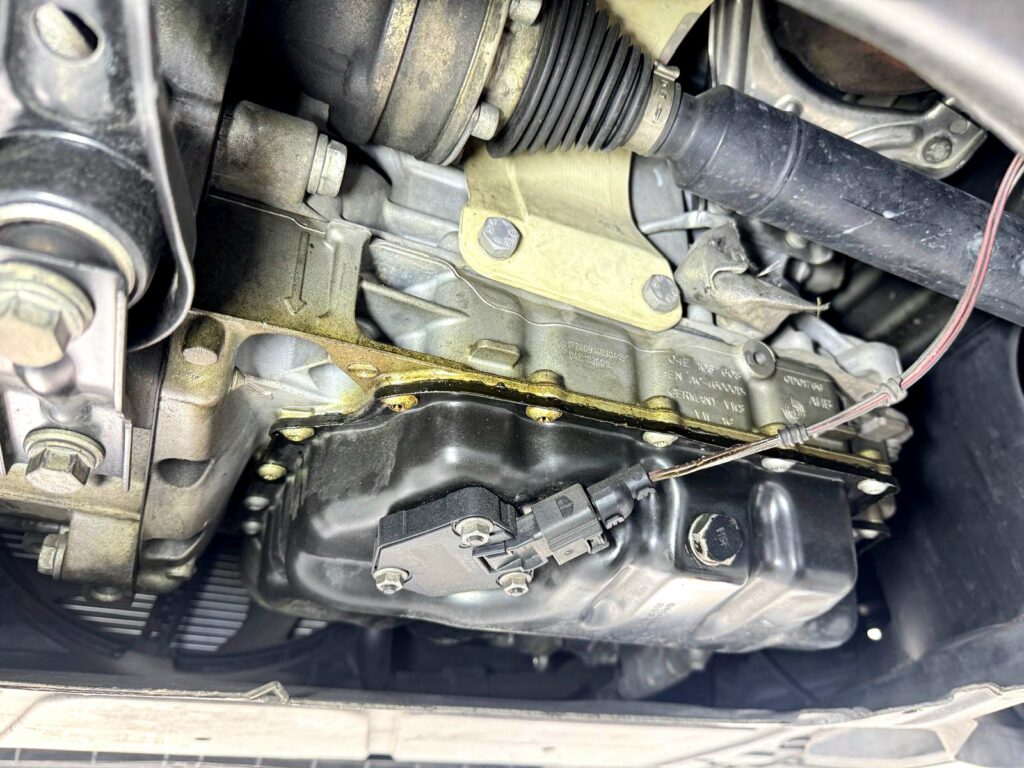
When inspecting a used car before purchase, signs of oil around the engine or undercarriage can raise immediate concerns.
However, finding an oil stain does not automatically mean that the vehicle has a major engine problem.
Oil can appear for different reasons, ranging from minor seepage around a seal or gasket to an active leak that requires further investigation. The location, amount of oil present and condition of the surrounding components all need to be considered before drawing a conclusion.
This is why checking underneath a vehicle forms an important part of a pre-purchase inspection.
What Does an Oil Leak on a Used Car Mean?
An oil leak occurs when fluid escapes from a component or sealing surface where it is normally contained.
During an inspection, this may appear as slight oil staining, dampness around a component, accumulated oil residue or, in more obvious cases, fresh oil around the affected area.
The significance can vary considerably.
A small amount of old residue does not necessarily carry the same implications as fresh oil actively accumulating or dripping from a component.
Therefore, simply stating that a vehicle has an “oil leak” without considering its location and severity does not provide the buyer with the complete picture.
Where Can Oil Leaks Come From?
There are many possible sources of oil leakage or seepage in a vehicle.
Depending on the engine and vehicle design, commonly inspected areas can include:
Engine Gaskets and Seals
Engines contain numerous gaskets and seals designed to prevent oil from escaping between components.
As these materials age or deteriorate, oil seepage may begin to develop around the sealing surfaces.
Oil Sump Area
The lower portion of the engine is another area that can show signs of leakage.
Oil around the sump does not automatically identify the source, however. Fluid originating higher up on the engine can travel downward and accumulate around lower components.
Oil Filter and Drain Plug Area
Oil residue around the oil filter housing, filter or drain plug may sometimes be associated with previous servicing.
For example, some residual oil may remain after an oil change.
The surrounding area therefore needs to be assessed before deciding whether the oil observed represents an ongoing leak.
Transmission Area
Not every oily substance underneath a vehicle necessarily comes from the engine.
Depending on the vehicle, fluid may originate from the transmission or another mechanical system.
Identifying the approximate source is therefore an important part of the inspection.
Why Checking the Undercarriage Matters
Some fluid leaks can be difficult to identify during a normal used-car viewing.
Looking into the engine bay from above provides only a limited view of the vehicle.
From underneath, an inspector may have a clearer view of the lower engine, transmission and surrounding components.
This can reveal conditions that may otherwise be difficult to see, including:
- Oil or fluid seepage
- Fresh fluid accumulation
- Previous fluid residue
- Damaged underbody components
- Worn suspension components
- Deteriorated bushings or mountings
- Signs of impact underneath the vehicle
- Other visible mechanical conditions
This is one reason our pre-purchase inspection includes an undercarriage inspection rather than relying solely on an engine-bay inspection.
Oil Seepage vs an Active Oil Leak
It is useful to distinguish between slight seepage and a more obvious active leak.
Oil Seepage
Seepage may appear as a thin layer of oil or dampness around a gasket, seal or component.
There may be no visible dripping or significant accumulation.
It should still be reported and monitored, but the presence of seepage alone does not tell us how quickly the condition may progress.
More Significant or Active Leakage
Fresh oil accumulation, oil spreading across surrounding components or visible dripping generally deserves greater attention.
In these situations, further diagnosis may be appropriate to identify the source and determine what repair is required.
The distinction is important because not every trace of oil underneath a used car carries the same level of concern.
Can You Identify an Oil Leak Just by Looking Under the Car?
Sometimes the approximate area can be identified visually, but determining the exact source is not always straightforward.
Oil can travel.
For example, fluid leaking from a higher point on the engine may run down the engine casing before eventually appearing around the bottom of the vehicle.
Airflow while driving can also spread fluid across neighbouring components.
As a result, the place where oil is visible is not necessarily the exact point where the leak originated.
In some cases, further diagnosis may involve cleaning the affected area and monitoring where fresh oil subsequently appears.
During a pre-purchase inspection, the objective is to identify and report the observable condition and advise when further investigation is appropriate.
Does an Oil Leak Mean You Should Not Buy the Car?
Not necessarily.
The presence of an oil leak should be considered together with:
- The likely source
- Severity of the leakage
- Amount of oil present
- Whether the oil appears fresh or old
- Engine oil level
- Other mechanical findings
- Vehicle age and mileage
- Maintenance history, where available
- Potential repair involved
A relatively minor leak or seepage may have very different implications from a substantial active leak involving a more difficult-to-access component.
Rather than immediately concluding that a vehicle should be rejected, the buyer should understand what was found, what further investigation may be needed and what repair implications could be involved.
An Example From an Actual Pre-Purchase Inspection
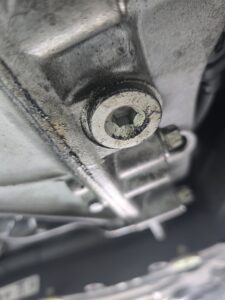
During one of our pre-purchase inspections, oil staining was observed while inspecting the vehicle’s undercarriage.
Because the affected area was visible from underneath the vehicle, the finding could be documented and highlighted to the buyer as part of the inspection.
The important point was not simply that oil was present.
The surrounding area also needed to be examined to understand the extent of the staining and whether there were other visible signs that could help determine where the oil may have originated.
Oil staining observed from the undercarriage during an actual pre-purchase inspection.
This is an example of why inspecting a vehicle from underneath can provide information that may not be obvious during a normal viewing or short test drive.
[View the full Real Inspection Case]
What Should a Buyer Do if an Oil Leak Is Found?
If an inspection identifies oil leakage or seepage, the next step depends on the nature of the finding.
Where the source can be reasonably identified, the buyer can consider the likely repair required and discuss it with the seller before making a decision.
Where the source cannot be confirmed during the inspection, further diagnosis may be appropriate.
The buyer should also consider the finding together with the rest of the vehicle’s condition.
A used car should not normally be judged on one observation alone.
Can a Diagnostic Scan Detect an Oil Leak?
Generally, a diagnostic scanner does not directly detect most physical oil leaks.
Electronic diagnostic systems monitor sensors and operating conditions, but oil escaping through a gasket or seal may not generate a fault code.
In some circumstances, a related condition may eventually trigger a warning or diagnostic fault, but the absence of fault codes does not prove that there are no fluid leaks.
This illustrates why electronic diagnostics and physical inspection serve different purposes.
A diagnostic scan can provide information stored within the vehicle’s electronic systems, while a physical inspection can reveal conditions such as leaks, component wear and undercarriage damage.
A Clean Engine Bay Doesn’t Tell the Whole Story
A clean-looking engine bay can be encouraging, but it should not be the only area assessed when considering a used vehicle.
Some leaks are easier to observe from underneath the car, while others may only become apparent after the vehicle has been operating.
Similarly, recently cleaned components can sometimes make historical fluid residue less obvious.
For this reason, the condition of the engine bay should be considered together with the undercarriage, fluid levels, road-test behaviour and other mechanical findings.
Why Oil Leaks Should Be Assessed, Not Assumed
Finding oil underneath a used vehicle deserves attention, but the presence of oil alone does not tell you the severity of the problem.
The important questions are:
Where is it coming from?
How significant is it?
Is it currently active?
What may be required to rectify it?
A proper pre-purchase inspection helps document these findings so that buyers have more information about the condition of the vehicle before making their decision.
At Prepurchaseinspection.sg, the undercarriage forms part of our broader inspection process alongside the engine and transmission, electronic diagnostics, body and paintwork, tyres, air-conditioning, interior systems and road test.
You can view our full pre-purchase inspection checklist to see the areas covered during an inspection, or browse our real inspection cases for examples of findings observed on vehicles inspected at our facility.